

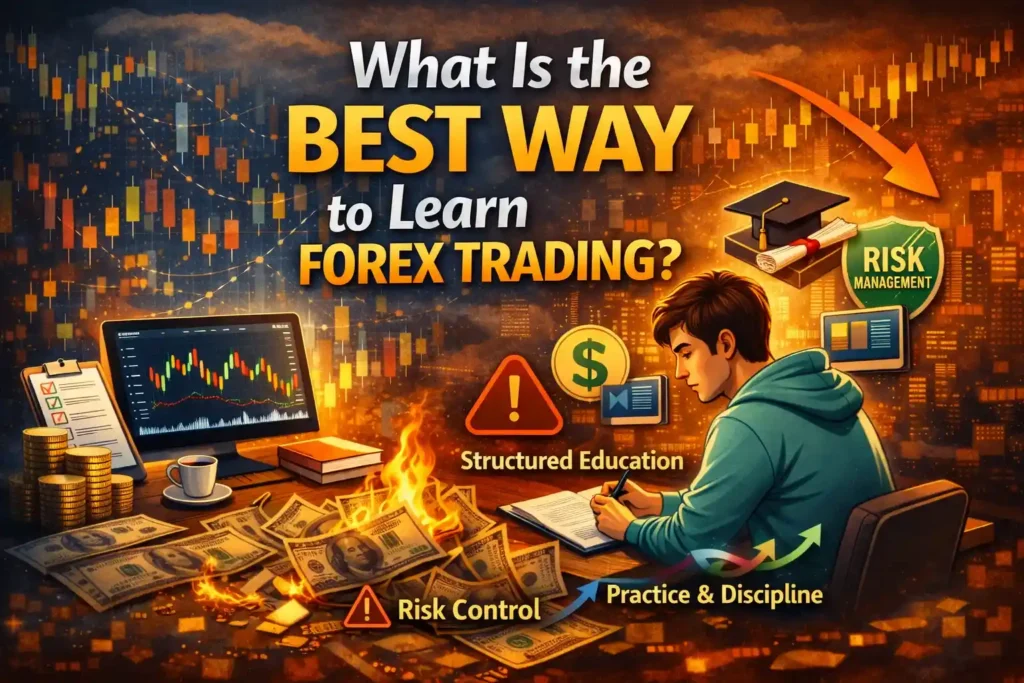
What Is the Best Way to Learn Forex Trading?
Key takeaways
- Learning forex is a skill-building process, not a quick win.
- Structure beats random videos or strategies.
- Demo trading is essential when used correctly.
- Risk management should be learned early.
- Consistency matters more than speed.
Start by understanding what forex trading actually is
Before learning strategies, beginners should understand how the forex market works, what currency pairs are, and how trades are structured.
If you’re new, start here: what forex trading is and how it works.
Why most beginners struggle to learn forex
Many beginners don’t fail because forex is too complex, but because they learn in an unstructured way.
- Watching random YouTube videos with no progression
- Switching strategies every few days
- Trading live before understanding risk
- Chasing fast profits instead of skill development
These habits create confusion and slow learning.
Learn risk management early (not later)
Risk management is one of the most important skills in forex, yet many beginners ignore it until they experience losses.
A simple beginner rule is to risk 0.5%–1% per trade. This keeps mistakes survivable while you learn.
Understanding risk early helps explain why most forex traders lose money.
Use a demo account the right way
A demo account is a training tool, not a game.
Use demo trading to:
- Practice placing trades and managing orders
- Test one strategy consistently
- Build discipline without financial pressure
Treat demo trading like real trading, using realistic account size and position sizing.
Focus on one simple strategy at a time
Beginners learn faster when they focus on one repeatable approach instead of trying everything.
Good beginner-friendly approaches include:
- Basic support and resistance
- Simple price action setups
- Clear trend-following rules
The goal is consistency, not complexity.
Follow a clear learning path
A simple learning sequence for beginners looks like this:
- Learn how forex trading works
- Understand risk management and position sizing
- Practice on demo with one strategy
- Journal and review trades weekly
- Transition slowly to live trading
This is the same path outlined in how to start trading forex as a beginner.
How long does it take to learn forex trading?
Learning forex trading takes time. Most beginners need months of consistent practice before they understand the market well enough to trade confidently.
Profitability usually comes later and depends on discipline, risk control, and consistency.
This is why many people ask can beginners really make money trading forex.
FAQs about learning forex trading
Can I learn forex trading on my own?
Though difficult, it is possible to learn on your own, but expect profitability to take much longer versus enrolling with a professional education provider such as Falcon FX.
Is forex hard to learn for beginners?
The basics are learnable, but consistency and discipline take time. Forex is difficult mainly because of emotional and risk management challenges.
Should beginners pay for forex courses?
Some paid education can be helpful if it focuses on risk management, psychology and structure rather than shortcuts or promises.
How long should I practice before trading live?
Many beginners benefit from demo trading for weeks or months, until they can follow rules consistently without emotional decisions.
What’s the biggest mistake when learning forex?
The biggest mistake is rushing the process—trading live too early, over-leveraging, and constantly switching strategies.